INTERVIEW WITH THE FIELD INVESTIGATORS
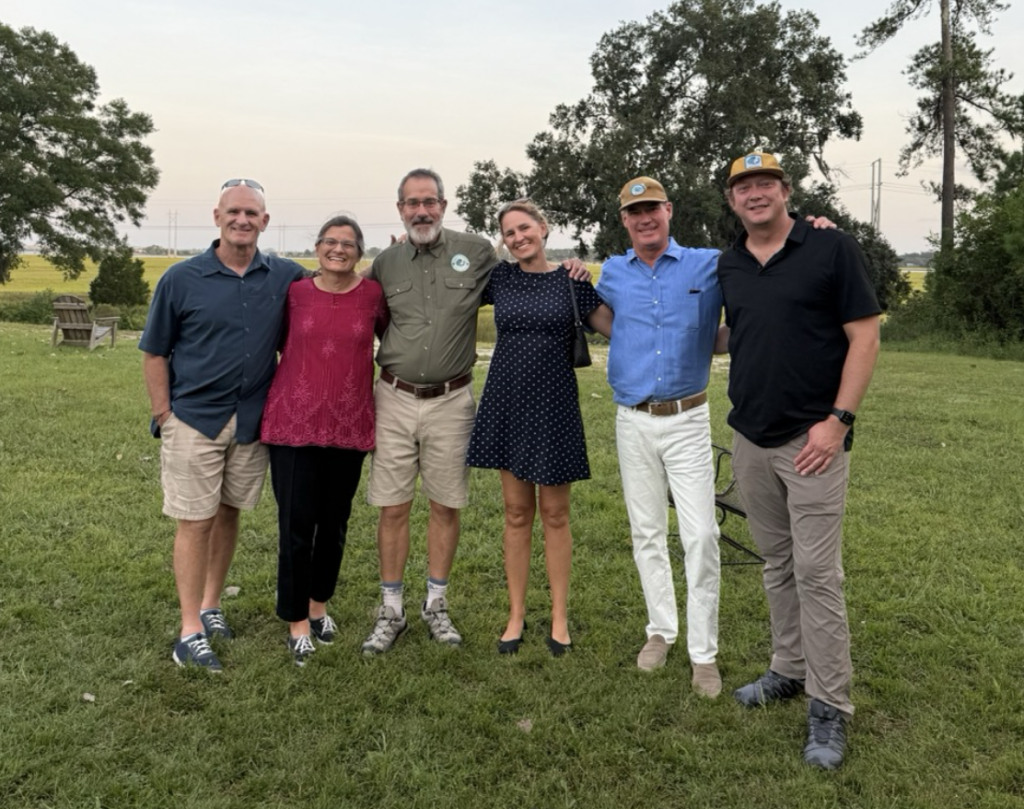
From left to right: John Maraia, Pam Ferguson, Scott Glass, Linda Parlo, Malcolm Crosland, Andrew Pagels
Not pictured: Mike Marcell, Bill Donaldson
Why do you choose to support Charleston Waterkeeper? How did you get started with us?
SCOTT GLASS: Before I retired at the end of 2024, I looked into various local organizations in the local conservation space that I may be interested in volunteering for. I knew about Charleston Waterkeeper, and after researching further, I was impressed with the work that they do. Andrew Wunderley graciously agreed to meet up for coffee to talk about opportunities, and after that conversation, I knew that this was an organization I wanted to be a part of. My template for volunteering was to work with organizations that created positive impacts in the local conservation community, and CWK fits this perfectly!
LINDA PARLO: Why I support Charleston Waterkeeper is because you make a real, hands-on difference for our local waters, by protecting it through involvement of the community and advocating for healthier water. I first connected with the team at the Sewee Exposition 2015. We talked about ways I could help protect local creeks and rivers and I have loved every minute of volunteering ever since!
JOHN MARAIA: I support Charleston Waterkeeper because it is the best way for me to protect the things that I love most about the Lowcountry; our marshes, rivers and beaches. I was first introduced to Charleston Waterkeeper when my wife Debbie and I took part in a clean-up in Francis Marion National Forest in early 2021.
BILL DONALDSON: I volunteered at an oyster trash clean up shortly after I moved here in 2020. Now, I volunteer for almost every aspect of Waterkeeper because of their partnerships I get access to things I could never do and have even greater impact.
MALCOLM CROSLAND: Helping maintain the health of our tidal estuaries is important to me. CWK is the perfect opportunity for me to help ensure our marsh ecosystem is protected.
How long have you been involved with the Swim Alert program and why did you want to become a community scientist? What’s your favorite part about being a Field Investigator?
BILL DONALDSON: Besides helping clean our waterways, it’s the people at Waterkeeper that keeps me coming back and doing different events. Cheryl makes picking smelly trash from piles of oyster shells on blistering hot asphalt a fun day.
JOHN MARAIA: My involvement with the Swim Alert program began in the spring of 2023. Debbie and I were already creek watchers for Charleston Waterkeeper and the Swim Alert program sounded like a great way to expand my service as a community scientist, collecting samples that are critical to monitoring the health of the Lowcountry’s waterways. My favorite part of being a Field Investigator is serving on the Boat Crew on a calm Wednesday morning, collecting samples in a beautiful setting.
PAM FERGUSON: I started about a year ago and I love data! Data helps us learn the truth about our environment, and what helps and what hurts it.
SCOTT GLASS: I participated in the April 2025 Swim Alert training and started conducting field investigations the following month, so I have now been part of the Swim Alert Team for almost a year and a half. I spent 20 years of my career as an Environmental Engineer for the Navy, and I was interested in getting back into the Environmental, Conservation and Natural Resource space in retirement. I enjoy the technical aspects of field work, and the precision and accuracy required while collecting samples to ensure consistency and sample integrity. However, I would say my favorite part of being a Field Investigator is when I have the opportunity to talk to the public about what we’re doing and the important data that is generated from our samples that helps keep them safe!
MALCOLM CROSLAND: I’ve been involved since the 2026 sampling season started. I got involved to learn more about the program and contribute to its success. My favorite part of being a field investigator is being on the water (when the weather is good)!
LINDA PARLO: I have been involved for a few years now. I joined because working with CWK is a great way to give back and make a difference for our local waters. Being a Field Investigator allows me to combine my passion for nature with a meaningful cause. I love getting out to enjoy our beautiful waterways while meeting wonderful, like-minded people along the way.
What is your favorite way to enjoy clean water?
PAM FERGUSON: Playing in ocean waves and stand up paddleboarding.
JOHN MARAIA: I love to kayak and stand-up paddle board on the Wando River and nearby creeks.
BILL DONALDSON: Watching the sunset over the Wando River then turning my kayak around to see the moonrise.
LINDA PARLO: My favorite way to enjoy clean water is by boating, kayaking, snorkeling, or just being out on, by, under, above or in the water. It does not really matter to me how, as long as I get to be around water.
SCOTT GLASS: My favorite way to enjoy clean water is being out on my boat, up in a random creek, far away from any development just appreciating the sheer beauty and grander of a healthy estuarial system, where clean water is the foundation of these healthy habitats.
MALCOLM CROSLAND: Fishing, sailing, surfing.
Do you have a favorite waterway in Charleston or a memorable experience on the water?
LINDA PARLO: The Cape Romain area, heading our from McClellanville, is probably my favorite waterway around here, but the upper Ashley river is also really beautiful, passing the historic plantations. Of all my memories on the water, snorkeling with Orcas (Killer Whales) in a crystal-clear fjord in Northern Norway is the most unforgettable memory. A mother and her calf dove right beneath me and I could watch them glide through the depths.
MALCOLM CROSLAND: Exploring Bull Bay and its many creeks.
JOHN MARAIA: My favorite waterways are the Wando River, Ralston Creek and Nowell Creek. I have two very memorable experiences on local waters. I remember kayaking near the mouth of Ralston Creek and happening upon a couple of manatee grazing on sea grass. Until then, I didn’t realize manatees came this far north, let alone up the Wando! I remember taking my SUP out on a foggy morning on the Wando when the water was smooth as glass. While I was out, I could hear dolphins breaching ahead of me. I sat down on my SUP as they passed by and I captured a photo of a mom hoisting a baby dolphin out of the water just off the side of my SUP.
BILL DONALDSON: Kayaking down Cuckold creek to the Combahee River. You pass by scenes from Forrest Gump, enter rice fields, paddle under nesting Bald Eagle and Ospreys, and end at the site where Harriet Tubman led a raid by African American soldiers of the 2nd South Carolina Infantry in June 1863.
SCOTT GLASS: I truly love so many of the waterways in the Charleston area, but my favorite is probably making the run up the Folly River, through the flats and up to Morris Island. My most memorable experiences are when I explore a remote creek and experience the new views for the first time.
Why is environmental stewardship important to you and why should others become a waterway steward like you?
MALCOLM CROSLAND: Our saltwater estuaries are the nursery grounds for a vast number of interconnected species. The lynchpin for the continuation of those species is having clean water that can support the reproductive process. If water quality deteriorates, the reproductive process will collapse, and the entire interconnected ecosystem will not survive.
It’s everyone’s responsibility to help protect our ecosystem. If for no other reason, for self-survival.
SCOTT GLASS: Environmental stewardship is critical to ensuring we have the natural resources we love for generations to come. Collecting the data needed to understand where and what the stressors to our waterbodies are is critical to being able to potentially implement change to better protect these resources. If everyone did just a little bit to help protect and conserve our waterways and other natural resources, just imagine the impact that would have!
PAM FERGUSON: Destroying our waterways impacts almost all life on earth.
JOHN MARAIA: Environmental stewardship is important to me because it is inherent in my obligation to care for God’s creation for my children, grandchildren and future generations. Others should become waterway stewards because our local waters are what make the Lowcountry so very special.
BILL DONALDSON: I love sharing our waterways and low country wildlife with my four year old grandson. And someday, if he has grandchildren, I hope they will be blessed to have that same experience as we do today. That’s why I volunteer, because the water and wildlife we enjoy isn’t just something to enjoy today; it’s something we owe our future generations.
LINDA PARLO: Because we are all dependent on nature, it is up to us to protect it for ourselves, future generations and all living things. Growing up by the ocean shaped me and inspired me to become a marine biologist. Since then, I have been privileged to work directly with water through fishery science, environmental monitoring and shoreline protection. I became a steward to protect these essential resources, and you should join as a waterway steward to make a difference, too!
Tell us something interesting about yourself that we might not know!
JOHN MARAIA: Our family has always been active in the outdoors, kayaking, biking, hiking, camping, etc. However, I credit our daughter Meghan for my interest in environmental stewardship. Her work as a marine scientist and coastal ecologist has highlighted the challenges facing our environment. Her passion for protecting the natural world has inspired me.
BILL DONALDSON: I was “in” the 1979 U.S. Women’s Open golf tournament. Well, I actually worked for ABC Sports as a spotter, tracking where the players’ shots landed and relaying that information to the producers for the broadcast team. It was a pretty unique way to experience a major golf tournament and see how live television works.
PAM FERGUSON: I’ve been to Yemen, which is a beautiful, fascinating place with warm and friendly people.
SCOTT GLASS: When I was working as an Environmental Engineer for the Navy earlier in my career, I was assigned to a project north of St Paul Minnesota, where an old World War II era dump site was leaching chlorinated solvents into the Mississippi River, just above a potable water intake for the City of St Paul. I was part of the team to develop the strategy to cut off the contaminated groundwater flowing into the river, and treating the contamination sources. For our efforts, I, along with the State and EPA regulatory representatives on the team, received a Certificate of Accommodation!
MALCOLM CROSLAND: I can eat an entire bag of Med -Del Ginger Snap Cookies in one go. Some might say that’s gluttonous; I say it’s a talent.
LINDA PARLO: You might not know that I have lived in five different countries across North, South, and Central Europe, Asia, and now on the US East Coast. Originally from Sweden, my family lived in the Charleston area from 2014 to 2017. We returned to Sweden in 2018, but we missed this beautiful place so much that we made the leap to move back here in 2024. When I am not working with water, enjoying the outdoors or hanging out with family and friends, you can find me practicing Capoeira. It´s a Brazilian martial art that combines music, dance-like movements, acrobatics, and self-defense.
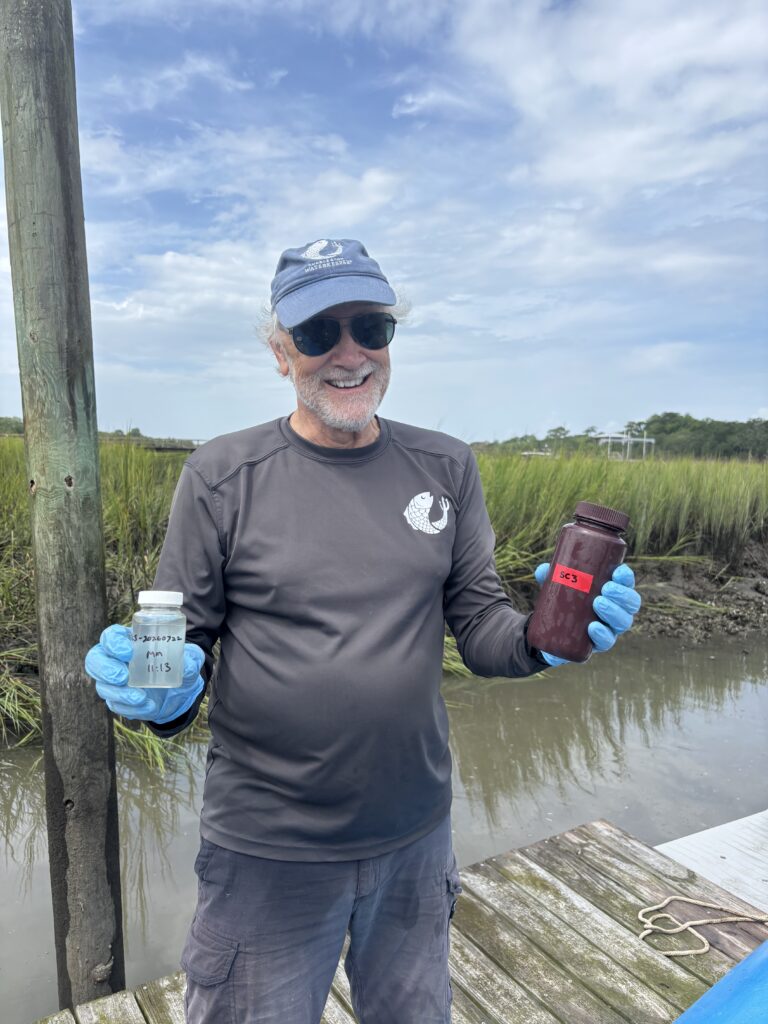
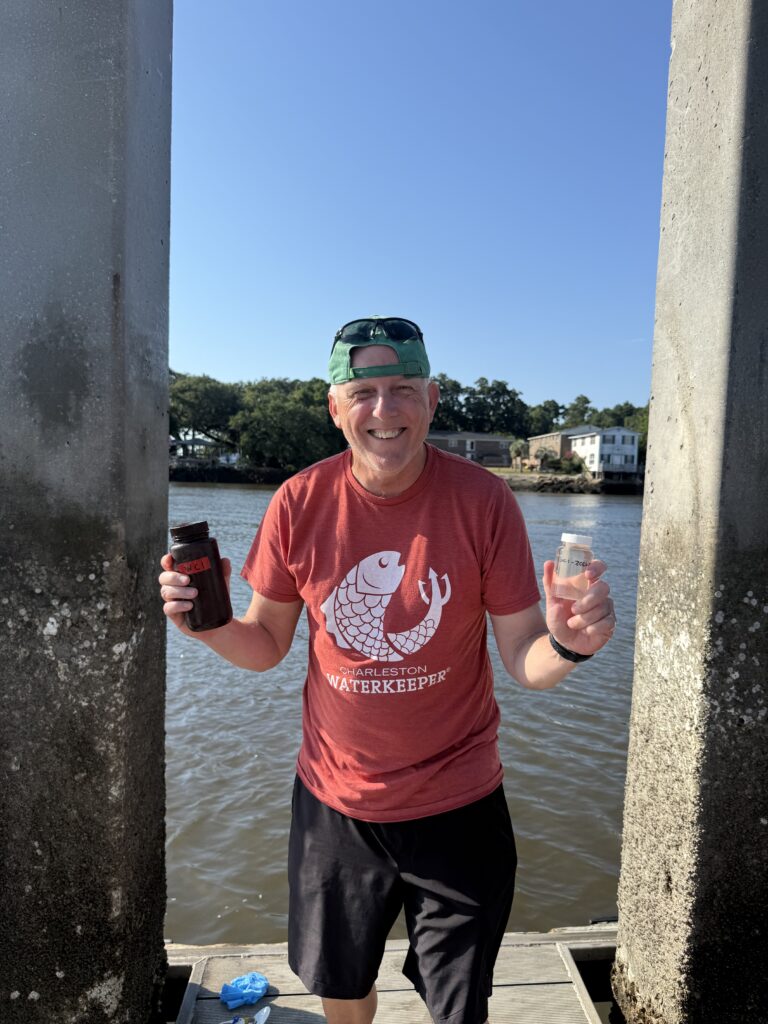
Mike Marcell Bill Donaldson