INTERVIEW WITH DARBY REED
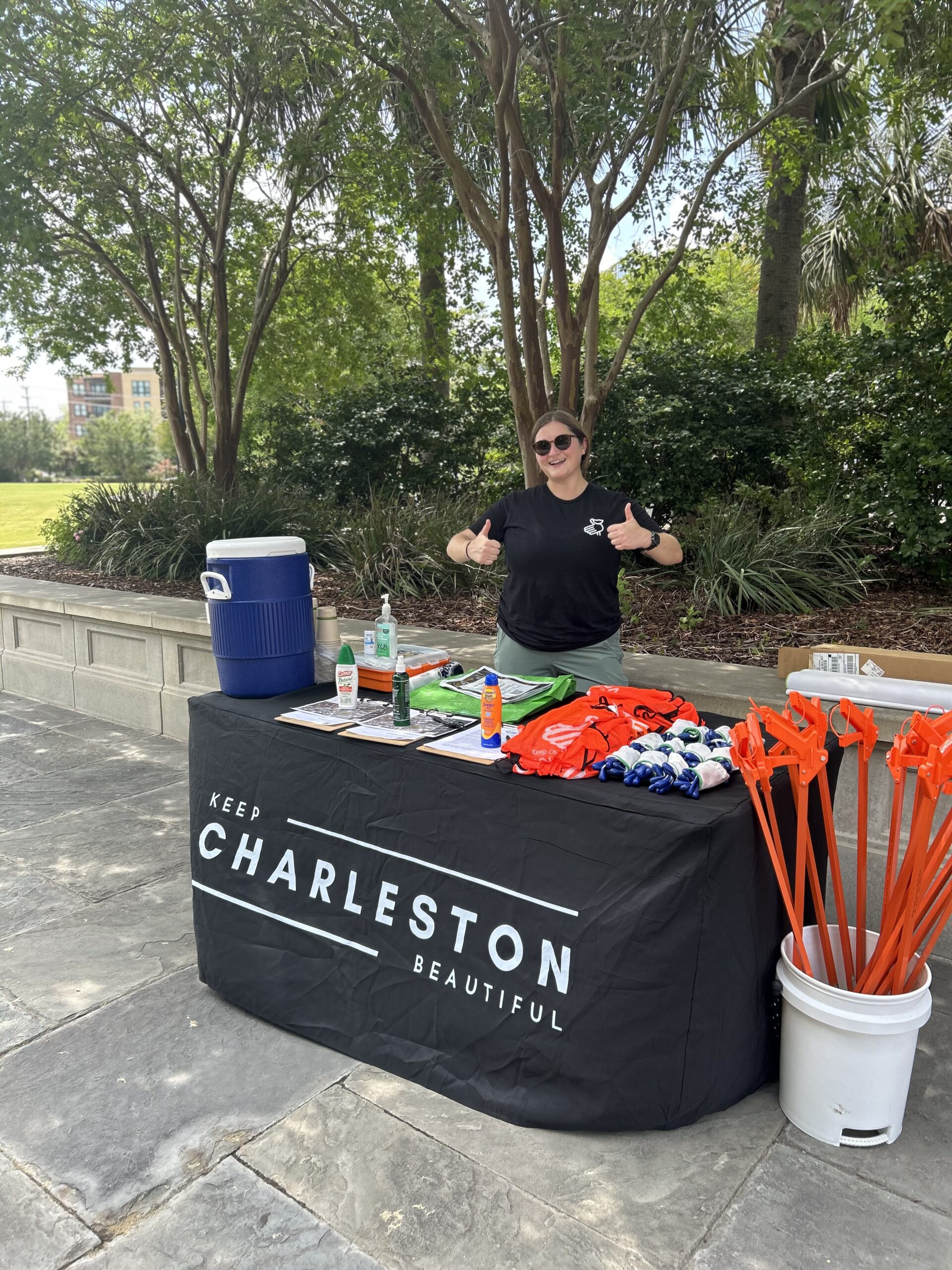
Darby Reed is the Volunteer and Events Coordinator at Keep Charleston Beautiful and an amazing partner and member of our community!
Why do you choose to support Charleston Waterkeeper? How did you get started with us?
Charleston is a coastal community, meaning that water is central to our lives. Water shapes our environment, economy, recreation, and overall quality of life. I choose to support Charleston Waterkeeper because they are an ambassador for the waterways that connect and sustain our community. Through their work in education, advocacy, monitoring, and community engagement, they empower our residents to become active stewards of our waterways.
I began volunteering with Charleston Waterkeeper shortly after moving to the Charleston area in March 2023. Since April 2025, I’ve had the privilege to partner with Charleston Waterkeeper on a variety of projects and cleanup initiatives through my work with Keep Charleston Beautiful. These experiences have reinforced the importance of collaboration in environmental stewardship, and I am proud to work alongside the organization dedicated to protecting and preserving the waters that make Charleston such a special place.
What is your favorite way to enjoy clean water?
My favorite way to enjoy clean water is to be completely immersed in it. I grew up at the beach and learned at a young age how to read a wave: Do I float over, dive under, or ride it in? I’d stay in the water until the pruning in my fingers felt permanent, only coming out for food or red flags. Having access to clean water makes these core experiences of growing up near a beach possible and serves as a constant reminder of why this work matters.
Do you have a favorite waterway in Charleston or a memorable experience on the water?
It’s hard to pinpoint one favorite waterway or experience as being better than the others. As my Nana always says, “Any day on a boat is a good day”. Every time I’m on the water I think about how fortunate we are to live in a place where nature, water, and wildlife are so intertwined with our daily lives. Whether I’m in a kayak, on a jon boat, aboard a catamaran, a charter boat, or SCDNR’s EV Discovery, I’m reminded of why I chose to pursue the work that I do.
Why is environmental stewardship important to you and why should others become a waterway steward like you?
Environmental stewardship has always been a priority of mine and is reflected in both my actions and my career. From the Appalachian Mountains to the Lowcountry, I have worked to protect natural spaces through sustainable trail development and invasive species removal, to advocate for outdoor stewardship through expanding access to opportunities and community engagement, to enhance water quality through stormwater best management practices, oyster reef building, and water quality monitoring, and now to keep Charleston beautiful.
Litter isn’t just an eyesore, it’s a growing threat to our wildlife, our waterways, and the natural beauty that defines our home. When litter is left on roads, sidewalks, and green spaces it does not stay there. It gets carried by wind and stormwater, ultimately ending up in our rivers then the ocean. Along the way, wildlife can mistake trash for food or become entangled in it, often resulting in injury or death. Birds, turtles, and fish are especially vulnerable to plastic pollution, which can persist in our environment for decades. Beyond its impact on wildlife, litter diminishes the places we live, work, and play. It can discourage waterway recreation, clog our drainage systems, contribute to flooding, and create breeding grounds for bacteria that spreads disease.
When the community comes together to clean up our home, we are doing more than just picking up litter. We are protecting our diverse ecosystem, reducing environmental health risks, and preserving the natural beauty that makes Charleston so special. This is why stewardship matters to me and why I believe that everyone has a role to play in keeping our community and waterways clean and healthy for generations to come.
Tell us about a volunteer opportunity or event that you participated in/partnered on with Charleston Waterkeeper that was impactful to you and why.
Marshes play a vital role to our home by providing critical habitat, stabilizing shorelines, and protecting us from storm surges. However, these ecosystems cannot function as intended when they are inundated with litter and plastic. Charleston Waterkeeper and Keep Charleston Beautiful have worked together on multiple marsh cleanup events throughout the Charleston peninsula. These events provide a meaningful opportunity for residents and visitors alike to immerse themselves in one of Charleston’s most iconic landscapes while giving back by helping keep these ecosystems clean and resilient, protecting life for all inhabitants – BIG and small.
What’s something you’re working on at Keep Charleston Beautiful or a recent project that you’re excited to share?
We just wrapped up the greatest cleanup effort Charleston has ever seen!
As a program affiliate of Keep America Beautiful, Keep Charleston Beautiful joined the Greatest American Cleanup call-to-action initiative in recognition of America’s 250th birthday. The national goal was to remove 25 billion pieces of litter from parks, waterways, and public spaces by July 4, 2026. It’s an ambitious goal, but when communities work together, greatness is possible.
The Greatest Charleston Cleanup consisted of five large-scale community-wide cleanups across Charleston, including Johns Island, James Island, West Ashley, Daniel Island, and Downtown. Each event brought together different local organizations, businesses, and community leaders to ensure safe and impactful efforts. Together, we rolled up our sleeves, worked side-by-side, and showed what Charleston pride can accomplish!
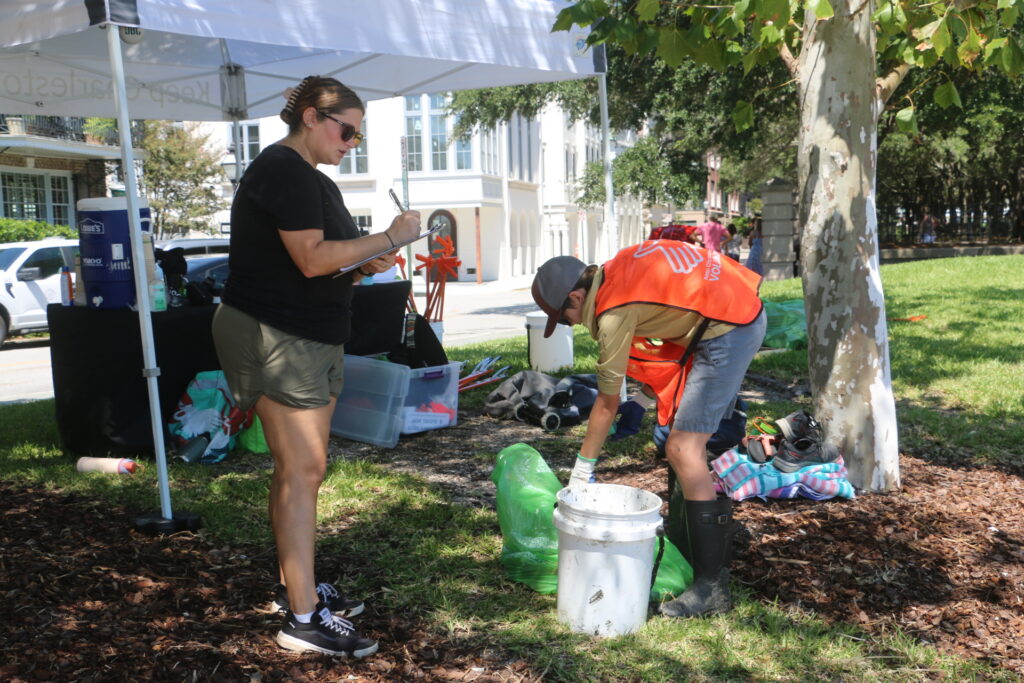
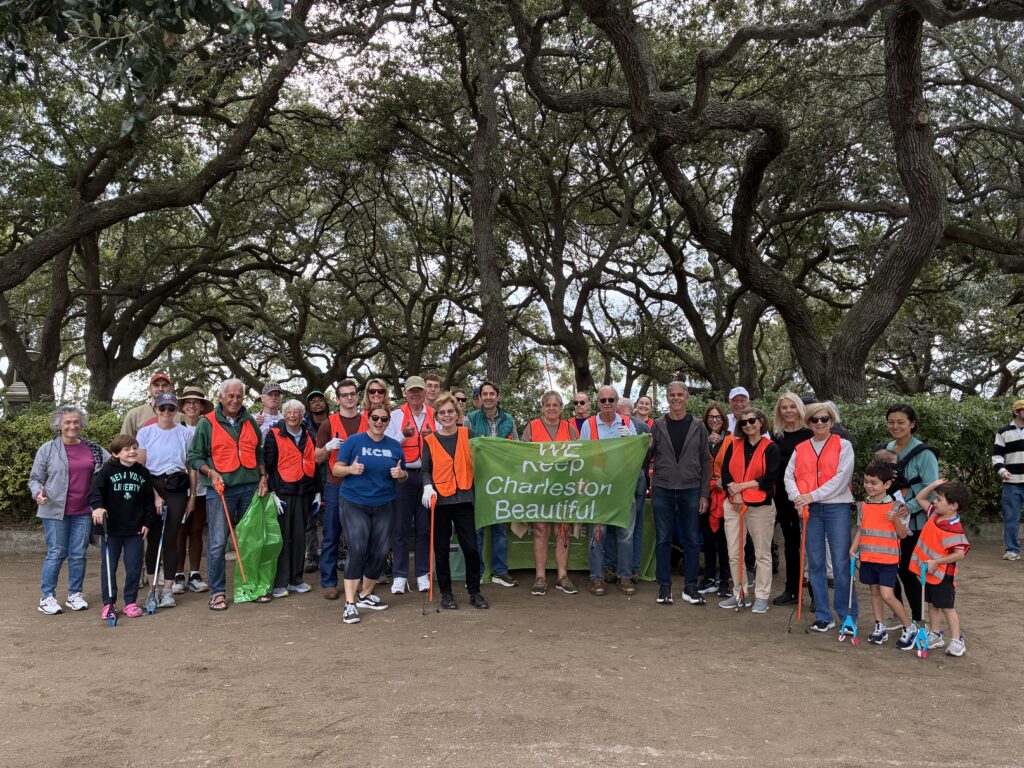
Charleston Waterkeeper was a partner in our final event of the series, the Downtown Community Cleanup. In this event alone, we cleaned up 7 locations within the peninsula, collaborated with 11 community partners, engaged with 125 volunteers, and removed approximately 1450 pounds of litter! We’re now compiling the final results from the full series and look forward to sharing the total impact soon!
Tell us something interesting about yourself that we might not know!
While technically my first job was leading ecotours and assisting with retail at a surf shop, my family likes to say that my first job was handing out colored golf balls at my family’s mini-golf course. When I was young, my grandfather owned a putt-putt in Sandbridge Beach. During the summers, my mom worked the front desk, my uncle worked the parking lot, and I ruled the greens. My favorite pastime was sneaking out through the back of the property to the marsh, where I would play in the water and try to catch toads. If I caught one, it was allowed to come home with me as my “24-hour pet”. My grandfather sold that property to developers many years ago, and condos now stand where the mini-golf course once was. Though that marsh access is long gone, the memories of those childhood days spent escaping to the water have stayed with me, ultimately becoming my “why.”